 Pagalsogns.me
Cryptocurrency markets can move sharply within a short period, making risk management an important part of any trading approach. For traders using a crypto CFD, the challenge is not only predicting whether Bitcoin or Ethereum may rise or fall. It is also understanding how sudden market events, leverage, liquidity, spreads, and execution can affect an open position.
Unlike buying and holding digital assets directly, crypto CFD trading allows traders to speculate on price movements without owning or storing the underlying cryptocurrency. This means there is no need for a crypto wallet, while traders can potentially take either long or short positions depending on their market outlook.
For anyone comparing cryptocurrency CFD brokers, understanding how these products respond to unexpected market developments is an essential part of choosing a suitable trading environment.
Why Crypto CFDs Can React Quickly to Market Events
Bitcoin and Ethereum are influenced by a wide range of factors. Regulatory announcements, major economic data, changes in monetary policy, technological developments, exchange activity, and broader investor sentiment can all affect cryptocurrency prices.
Market reactions can become particularly strong when several factors occur at the same time. For example, a major regulatory announcement may arrive while traders are already responding to changes in global interest rate expectations. This combination can create rapid price movements and wider short term uncertainty.
For a crypto CFD trader, the important point is that volatility can affect both profitable and losing positions. A trader who correctly identifies the longer term direction can still experience significant short term losses if the position size is too large or the market moves sharply before recovering.
This makes preparation more important than simply reacting after a large price movement has already occurred.
What Should Traders Watch Before Opening a Position?
Before trading Bitcoin or Ethereum CFDs, traders should consider the events that could influence market conditions during the expected holding period.
Economic calendars can help identify major events such as interest rate decisions, inflation data, employment reports, and central bank announcements. Although these events do not directly determine cryptocurrency prices, they can influence liquidity and broader risk sentiment.
Traders should also monitor cryptocurrency specific developments. Regulatory changes, network upgrades, security incidents, major industry announcements, and significant changes in market sentiment can all contribute to sudden volatility.
Another important consideration is trading liquidity. During highly active periods, prices can change rapidly between the time an order is submitted and the time it is executed. Understanding the broker’s execution conditions and pricing model can therefore be just as important as having a market view.
Why Leverage Requires Extra Attention
Leverage is one of the defining characteristics of CFD trading. It allows traders to control a larger position with a smaller amount of capital, but it also magnifies both gains and losses.
This becomes especially relevant when trading cryptocurrencies because the underlying market can already experience substantial price fluctuations. A relatively small movement in Bitcoin or Ethereum can have a much larger effect on a leveraged CFD position.
GTCFX states that leverage of up to 1:2000 may be available on selected crypto CFDs, subject to account type and regional requirements. The company also specifically notes that cryptocurrency markets are highly volatile and that traders should manage risk carefully.
The maximum available leverage should not automatically be viewed as the appropriate level for every trade. Instead, traders should consider their account size, position size, risk tolerance, and the distance between the entry price and their planned stop loss.
How Can Traders Prepare for Sudden Price Movements?
A practical approach begins with defining the maximum amount that can be lost before entering a trade. A stop loss can help establish this boundary, although traders should understand that in exceptionally fast markets, execution may occur at a different price from the requested level.
Position sizing is equally important. A smaller position can give a trader more flexibility when markets become volatile, while an oversized position can cause an account to experience significant pressure from relatively small price movements.
It is also useful to avoid making decisions based solely on a single news headline. Cryptocurrency prices can react quickly to initial information and then reverse as traders interpret the broader implications. Combining fundamental information with price action, volatility conditions, and technical analysis can provide a more structured basis for decision making.
What Should You Look for in Cryptocurrency CFD Brokers?
Choosing among cryptocurrency CFD brokers involves more than comparing leverage. Traders should examine several practical factors, including available instruments, spreads, execution, trading platforms, account conditions, risk controls, and regulatory information relevant to their jurisdiction.
GTCFX provides access to crypto CFDs through MT4, MT5, and the GTCFX Go app. Its crypto CFD offering includes BTCUSD, while the company describes its execution model as NDD with no dealing desk intervention. The crypto CFD page also provides information on spreads, leverage, market access, and account conditions.
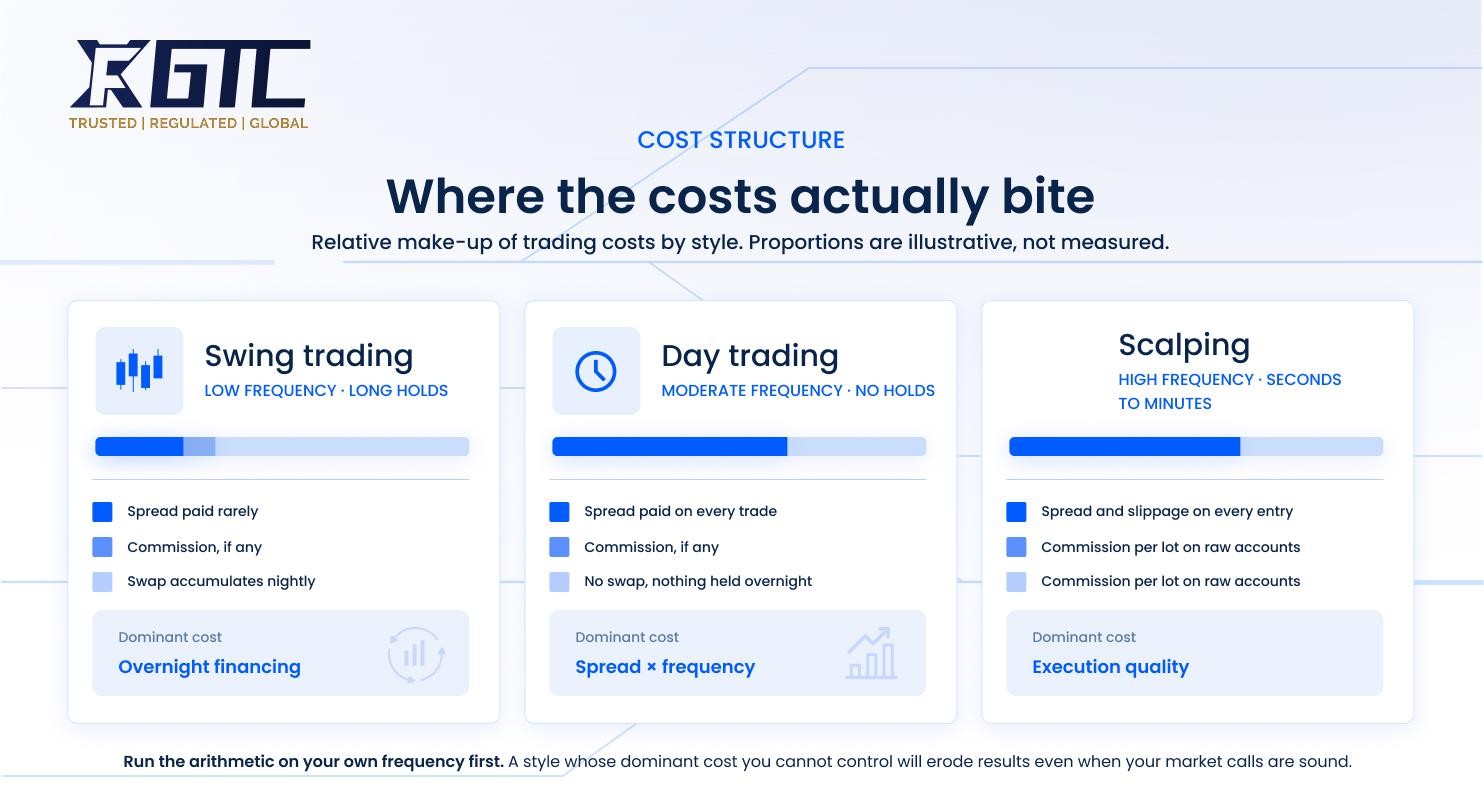
Trading costs deserve particular attention. The spread represents the difference between the buy and sell price, and it can influence the cost of entering and exiting a position. During volatile periods, market conditions can change quickly, so traders should understand how spreads and other applicable costs may behave.
Regulatory coverage is another consideration. GTCFX states that different entities within its group operate under different licences and that the entity available to a client depends on factors including jurisdiction and eligibility. Traders should therefore check which legal entity they would contract with before opening an account.
Why Execution Conditions Matter During Volatility
When markets move rapidly, execution can become a critical part of the trading experience. A trading strategy may be based on a particular entry or exit level, but the actual result depends partly on how orders are processed under prevailing market conditions.
GTCFX states that its crypto CFD infrastructure offers execution of under 10 milliseconds and provides access through multiple platforms. While execution speed does not eliminate market risk, reliable infrastructure can help traders manage orders more efficiently when prices are moving quickly.
Traders should still remember that fast execution cannot guarantee a specific price, particularly during periods of exceptional volatility or rapidly changing liquidity.
A More Disciplined Approach to Crypto CFD Trading
Trading a crypto CFD requires a different mindset from simply buying cryptocurrency for long term ownership. Because CFDs are leveraged derivatives, risk can increase quickly when market movements go against a position.
A disciplined trader should therefore define the trade rationale before entering, determine an acceptable level of risk, select an appropriate position size, and remain aware of scheduled and unexpected market events.
The objective should not be to predict every market movement. Instead, it is to build a process that can remain practical when the market behaves differently from expectations.
Making Informed Decisions in a Volatile Market
Bitcoin and Ethereum can present significant trading opportunities, but their rapid price movements also require careful risk management. Understanding event driven volatility, leverage, spreads, execution, and broker conditions can help traders make more informed decisions.
For traders researching cryptocurrency CFD brokers, GTCFX offers crypto CFD access without requiring ownership or storage of the underlying digital assets, together with multiple trading platforms and published information about its trading conditions.
Ultimately, successful risk management starts before a position is opened. By understanding the product, monitoring relevant market developments, controlling position size, and selecting trading conditions that match their experience and risk tolerance, traders can approach crypto CFD markets with a clearer and more structured framework.
Trading CFDs carries substantial risk, and leverage can magnify losses as well as gains. Traders should ensure they understand how CFDs work and consider whether the product is appropriate for their financial circumstances before trading.

