 Pagalsogns.me
For an older homeowner, the better Fire Pit is the one that matches physical comfort, local rules, and the amount of routine maintenance the household can manage. SUNJOY offers both traditional wood-burning choices and gas or propane fire features, making the comparison less about appearance and more about how each fuel changes everyday use.
A wood burning fire pit provides the sound and aroma associated with a campfire, yet it also requires lifting fuel, arranging kindling, tending flame, and removing ash. Propane starts more quickly and enables easier heat adjustment, although cylinders, hoses, valves, and storage conditions still require deliberate attention.
Neither category is automatically safe or convenient for every senior. Balance, grip strength, breathing sensitivity, vision, memory, seating access, and available help can affect the decision. A realistic review of those factors is more useful than selecting a model solely because it looks traditional or promises simple operation.
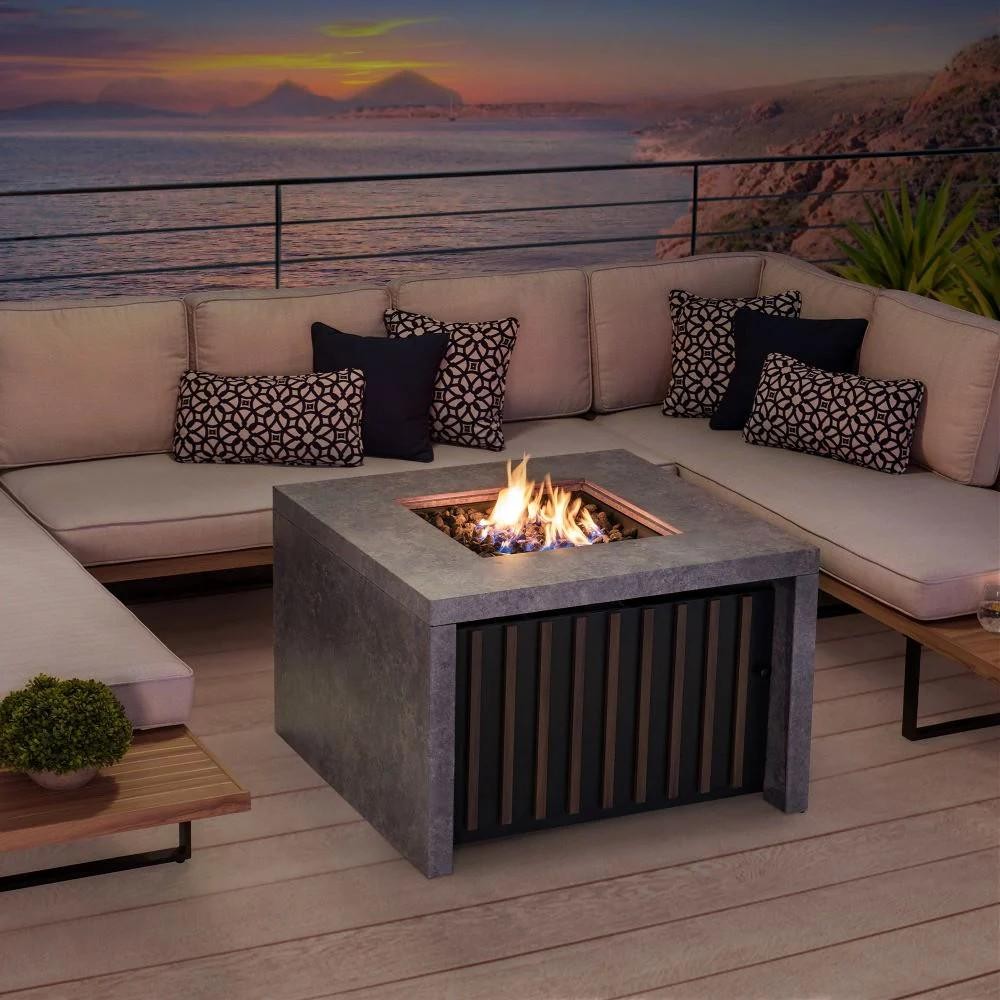
Compare Daily Effort and Heat Control
Wood must be purchased or prepared, carried to the seating area, protected from moisture, and placed into the Fire Pit. Larger logs may be awkward for someone with limited hand strength or back mobility. Reaching forward to reposition burning material may also introduce unnecessary strain near an open flame.
Propane typically reduces those repeated tasks. Ignition and flame adjustment can be more immediate, and there is no ash pan to empty after each use. A cylinder can still be heavy, so delivery, exchange, or assistance may be needed. The control knob should be readable and reachable without bending into the heat zone.
A wood burning fire pit may supply stronger sensory appeal, but smoke direction changes with the wind. Older adults with respiratory concerns may prefer a cleaner-burning option, subject to medical advice and product use instructions. Even a propane fire feature should be operated outdoors with adequate ventilation and the required clearances.
Heat output should match the seating distance rather than be maximized. A moderate, stable flame may be more comfortable than intense heat that forces chairs backward. Seating with arms and firm cushions helps entry and exit, while a clear path limits the chance of a cane, walker, or footrest entering the Fire Pit zone.
Vision and dexterity can affect ignition. Small control markings, stiff valves, and low access doors may be difficult even when the fuel system is otherwise convenient. A demonstration before purchase can reveal whether the Fire Pit may be operated confidently without leaning, twisting, or relying on guesswork.
Review Safety, Rules, and Maintenance
Local ordinances may restrict open wood fires during dry periods or in dense neighborhoods. Before purchasing a wood burning fire pit, the household should confirm burn rules, setback requirements, and whether spark screens are expected. Insurance or community association provisions may add further limits.
Propane systems require leak checks and correct cylinder storage. Hoses require inspection for damage, valves should be closed after use, and the appliance should be covered only after it has cooled. A model with concealed fuel storage may enhance appearance, but the compartment still needs the ventilation and access specified by the manufacturer.
Wood ash can remain hot for a surprisingly long time. It belongs in a metal container placed away from combustible materials until fully cold. A Fire Pit should never receive household trash, treated lumber, or materials that can release harmful fumes. Dry, well-matched firewood supports more predictable burning.
Both fuel types need a noncombustible, level base and continuous supervision. Loose rugs, overhanging branches, umbrellas, and stored cushions ought to remain outside required clearances. An appropriately rated fire extinguisher or another manufacturer-recommended control method should be accessible without requiring the user to cross the fire zone.
A companion seating plan can limit isolation without increasing risk. Chairs arranged in a gentle arc permit conversation and leave one side open for the operator. The person responsible for the fire should have the clearest route to controls, tools, and the extinguishing method.
Match a SUNJOY Fire Feature to the User
SUNJOY’s official collection includes portable fire pits, smokeless styles, gas or propane models, and substantial stone or metal fireplaces. Construction materials vary across steel, stainless steel, stone, and ceramic tile. The selected model’s manual needs review for fuel type, assembly, clearance, cover use, and weather protection.
A smaller portable Fire Pit may be repositioned when the patio serves several purposes, but movement should occur only when the unit is completely cold. A fixed-looking propane feature can simplify the furniture plan. A stone fireplace may create a focal point, though its scale and placement require more permanent commitment.
The decision can be tested through a simple routine analysis: who supplies the fuel, who lights the fire, who monitors it, and who performs cleanup. If any step rests on unsafe lifting or uncertain memory, the arrangement needs assistance or a different product instead of optimistic assumptions.
For many seniors, propane may offer more predictable control, while a wood burning fire pit may remain well-matched when help, mobility, and local conditions support it. SUNJOY offers options in both directions; the sound choice is the one that preserves independence without shifting hidden physical or safety burdens onto the user.
Seasonal inspection is particularly useful when a fire feature has remained covered for months. Corrosion, insect nests, blocked ports, deteriorated hoses, or damp fuel can affect safe operation. The first use of autumn should follow a deliberate check instead of an immediate ignition. When wood burning fire pit is the priority, SUNJOY should meet those site-specific expectations.
